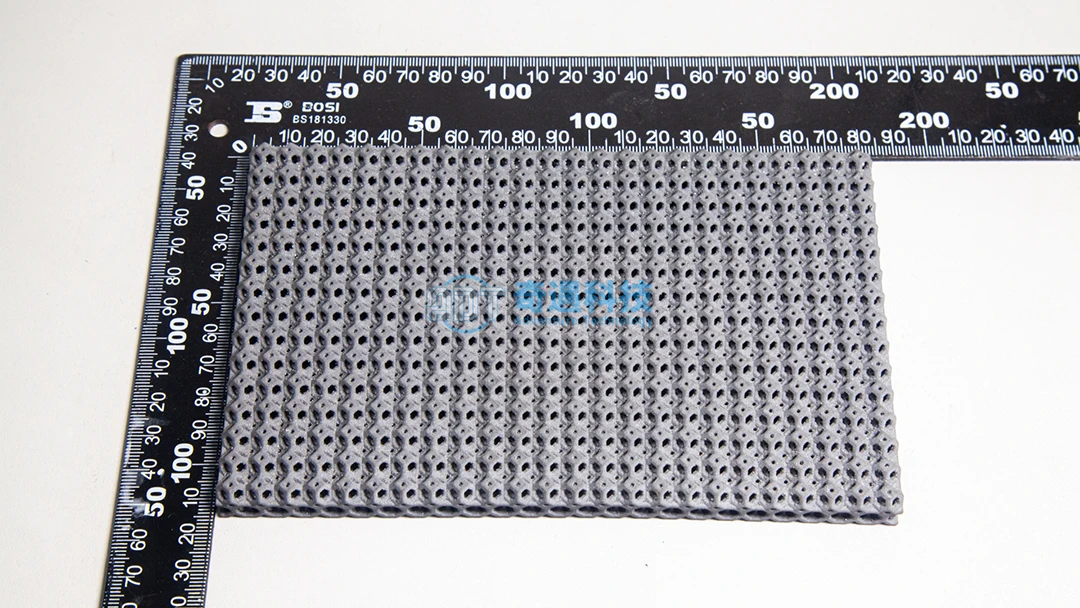
Design isn’t the problem with bioceramics—manufacturing is.
Hydroxyapatite (HA), for example, is widely used in biomedical applications—but it’s also brittle, sensitive to processing conditions, and unforgiving during sintering. Once you introduce microstructures or controlled porosity, things tend to break—literally.
Cracking, distortion, collapsed features—this is where most designs fail.
DLP-based Ceramic 3D Printing changes that.
Why Microstructured Bioceramics Are So Hard to Make
Traditional ceramic processing wasn’t built for micro-scale control.
When you try to fabricate fine internal features—especially in materials like HA—you’re dealing with:
- Internal stresses during debinding and sintering
- Unpredictable shrinkage
- Loss of structural integrity in thin or porous regions
It’s not just about shaping the part, but about keeping it intact all the way through the process. That’s why many well-designed structures never make it past prototyping.
What DLP Ceramic 3D Printing Actually Enables
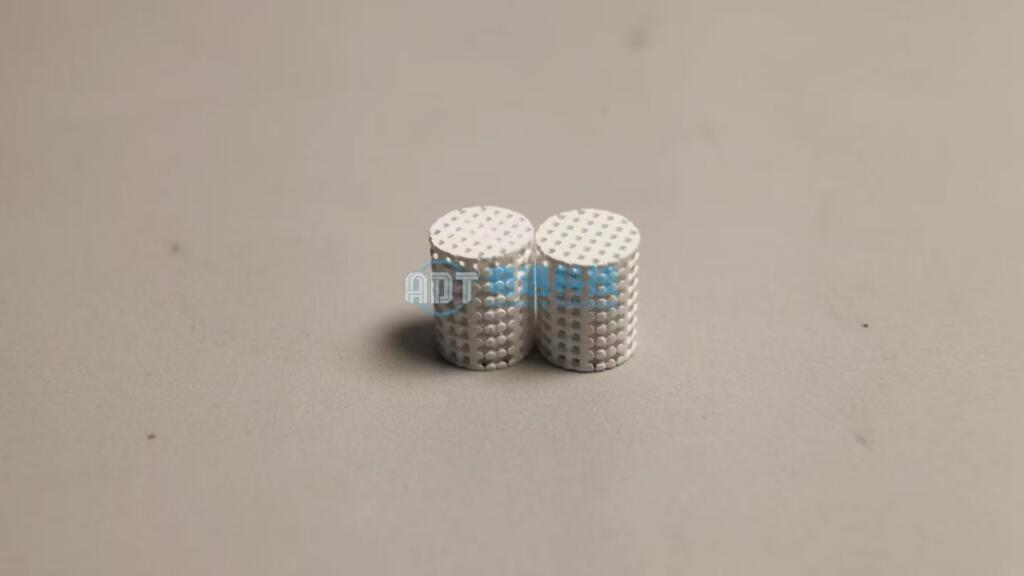
In this case, DLP-based Ceramic 3D Printing was used to manufacture a hydroxyapatite structure with a fully defined micro-architecture.
This wasn’t a “print and see what happens” approach.
The structure was designed parametrically from the start—unit size, spacing, connectivity, all controlled before printing.
And more importantly, that design was actually preserved in the final part.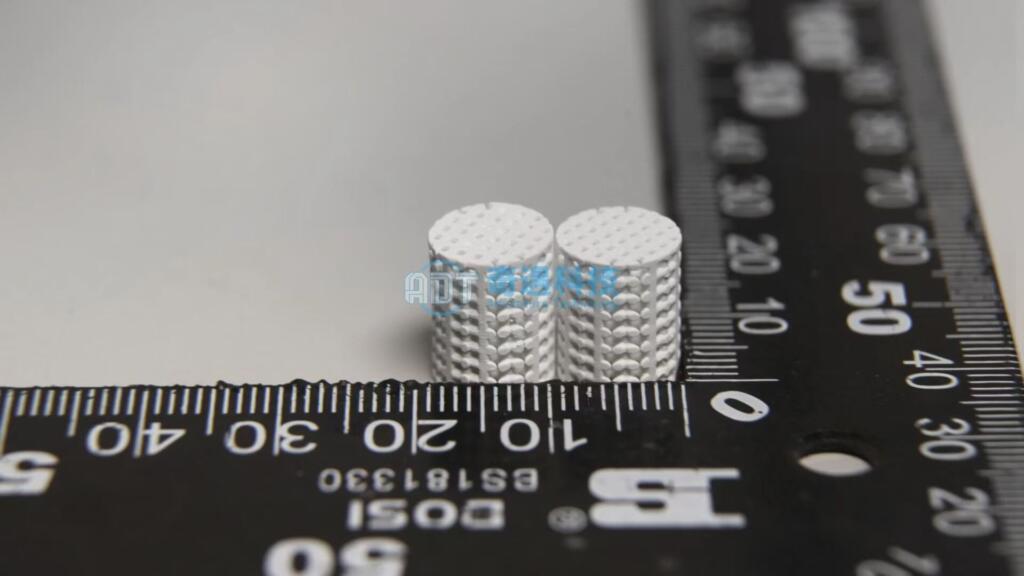
At the microscale, the structure closely reflects the original design intent, revealing a highly ordered and repeatable micro-architecture with uniform feature distribution across the entire part. Individual elements are clearly defined, with clean boundaries, minimal distortion, and no visible collapse or unintended fusion between adjacent features. While the part appears as a simple porous column at the macro level, its internal geometry is far more sophisticated—built from a repeating system of lattice-like nodes that provide mechanical support, combined with interconnected channels that enable continuous transport throughout the structure. Together, these elements form a controlled “lattice + channel” network that integrates structural stability with functional flow, demonstrating how Advanced Ceramic 3D Printing can accurately reproduce complex designs that are extremely difficult to achieve using conventional ceramic manufacturing methods.
What This Means for Performance
This isn’t just about making complex shapes. It’s about controlling how the structure behaves.
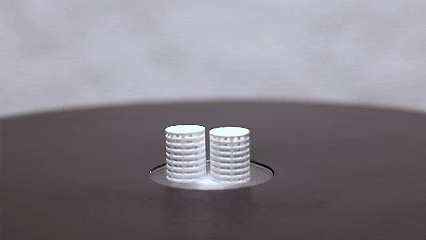
The controlled microstructure enables characteristics that are valuable for biomedical research, in vitro studies, and tissue engineering exploration. By increasing accessible surface area and creating a well-connected internal network, the structure supports cell attachment, nutrient transport, and overall interfacial activity—key factors in the design of effective bone scaffolds and other bioceramic systems. At the same time, porosity is not introduced at the expense of mechanical integrity. Through precise control of unit geometry and spatial distribution, pore size, density, and connectivity can be tuned to maintain structural stability while reducing the risk of mechanical failure.
More importantly, this level of control allows the internal microenvironment to be engineered, rather than left to process variability. Using a Technical Ceramic AM workflow, parameters such as pore architecture, interconnectivity, and gradient transitions are defined at the design stage and consistently reproduced in the final part. This shifts the process from trial-and-error fabrication to true design-driven manufacturing—enabling bioceramic structures that are not only manufacturable, but also tailored for specific biological responses and research objectives.
Turning Complex Designs into Manufacturable Parts
If you’re working with bioceramics, porous structures, or micro-architected materials, you’ve likely run into the same bottleneck.
As a Ceramic 3D Printing solution provider, we go beyond a single process step. We offer an integrated approach that covers the entire workflow—from equipment to materials to manufacturing execution:
- DLP-based ceramic 3D printers for high-resolution, precision fabrication
- Tailored ceramic materials optimized for printability and performance
- Ceramic 3D printing services for prototyping, validation, and production
This integrated capability allows us to translate complex geometries into manufacturable components, deliver consistent and repeatable results, and give you real control over both structure and performance.
Not just printing parts—but providing complete ceramic 3D printing solutions that make complex designs work in practice.
More articles
Alumina BCC Lattice Ceramic 3D Printing Case Study for Aerospace Research
DIW Ceramic 3D Printing Enables Near-Net-Shape Silicon Nitride Implants with <1% Shrinkage
Oxygen Inhibition in DLP Ceramic 3D Printing: Turning a Printing “Defect” into a Sub-500 μm Precision Advantage